
Sports teams carry their identity on every garment, from match jerseys to coach jackets and fan wear. The method used to apply a logo changes how the garment looks, how it feels in the heat, and how well it lasts through a season. Embroidery, heat transfer, and sublimation are the three methods in most common use, and each suits different garments, fabrics, and budgets. A uniform supplier in Abu Dhabi can match the method to the garment and the team’s requirements before production begins.
What to Consider Before Choosing a Method
The right method depends on how a garment is made and how it will be worn. Teams and organisers weigh these factors:
- Fabric: Cotton, polyester and blended fabrics each react in their own way to thread, heat and dye.
- Garment type: Match jerseys, jackets, polos, caps and training tops each carry a logo in a different way.
- Climate: Abu Dhabi heat and long hours on the field call for breathable fabrics and lightweight finishes.
- Design complexity: Gradients, small text and multi-colour artwork suit some methods better than others.
- Order size and budget: Some methods suit large batches, while others suit small runs and personalised items.
- Wash and wear: Kit that is washed after every match needs a finish that holds up to repeated cleaning.
Embroidery
Embroidery stitches the logo into the fabric with thread. The result is a raised, textured finish that looks structured and formal, and it is among the most durable options available. It is a common choice for jackets, blazers, polos, and caps, where the fabric is firm enough to hold the stitching.
- Strengths: A premium look, strong durability, and a finish that does not peel or fade.
- Limitations: Large or intricate artwork increases stitch count and cost. Fine gradients cannot be reproduced in thread, and heavy stitching adds weight to lightweight performance fabrics.
Heat Transfer
Heat transfer applies a vinyl film or a printed transfer to the garment using heat and pressure. It handles names, numbers, and small logos well, and it suits short production runs and individual personalisation, such as a different player name on each shirt.
- Strengths: Sharp detail, quick turnaround, and low setup cost for small batches.
- Limitations: The transfer sits on top of the fabric. It can crack or peel after repeated washing and stretching if the film is of poor quality or the application is not done to standard, and a large transfer reduces breathability.
Sublimation
Sublimation uses heat to turn dye into a gas that bonds with polyester fibres. The colour becomes part of the fabric, so there is no layer on the surface, no texture, and no cracking. It allows full-colour and all-over designs, which is why it is a common choice for team jerseys.
- Strengths: Vivid colour, a soft feel, full breathability, and a finish that lasts through repeated washing.
- Limitations: It works on polyester or high-polyester fabrics and gives the best results on light-coloured garments. It cannot be used on cotton, and it cannot print light colours onto dark fabric.
Comparing the Three Methods
| Method | Best for | Feel | Durability | Main limit |
| Embroidery | Jackets, blazers, polos, caps | Raised and textured | Strong | Cost rises with detail and stitch count |
| Heat transfer | Names, numbers, small batches | Slight layer on the surface | Good when well applied | Can crack or peel with wear |
| Sublimation | Jerseys, training kit, all-over designs | No texture | High | Limited to polyester and light fabrics |
Matching the Method to the Garment
Most teams use more than one method across a kit. A typical pairing looks like this:
- Match jerseys and training kit: Sublimation for the main design, with heat transfer for personalised names and numbers.
- Jackets, blazers and polos: Embroidery for crests and logos that need a formal finish.
- Warm-up tops and fan wear: Heat transfer or sublimation, depending on the fabric and the quantity.
- Full team sets: A consistent colour palette and logo placement across all methods, so every garment reads as part of one kit. A uniform supplier in Abu Dhabi can coordinate the methods within a single order and match colours between embroidered, transferred and sublimated pieces.
A Cricket Example: Custom Looks for UAE Bulls
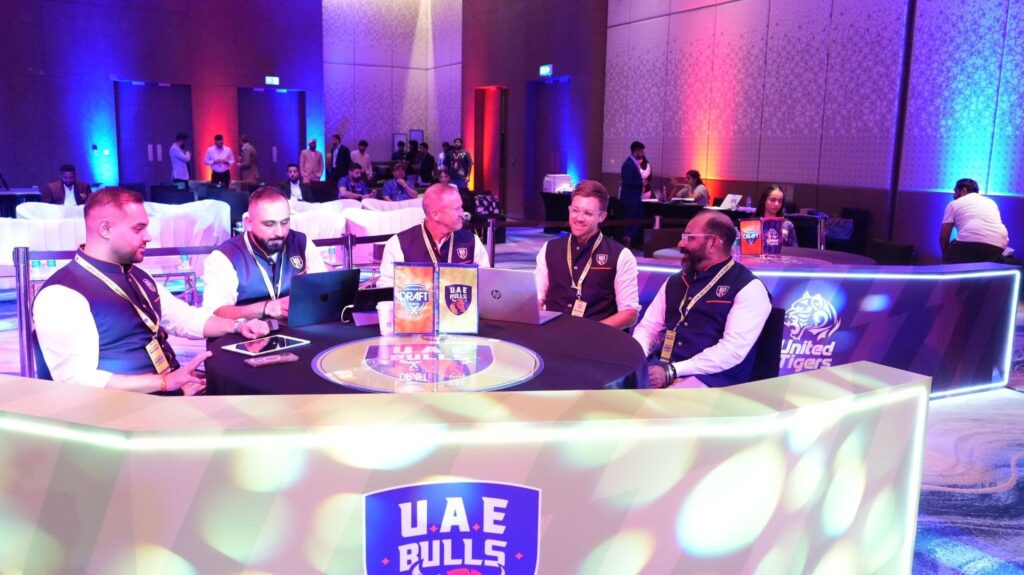
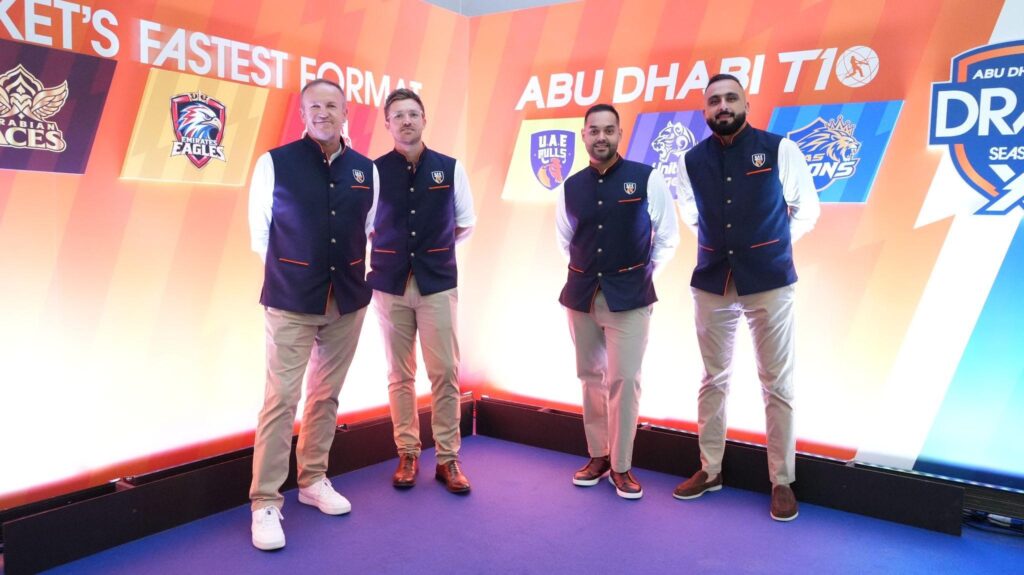
Golden Arch Tailoring & Textiles, a uniform supplier in Abu Dhabi, tailored jackets and shirts for UAE Bulls, the cricket team competing in the Abu Dhabi T10 Cricket League. Andy Flower and his team stepped out for a major cricket auction in the UAE wearing the customised looks, which included tailored Nehru jackets and finishing details created to feel sharp, coordinated and event-ready.
The project shows how tailoring and finishing work together on team wear away from the field. A coordinated set depends on fit, fabric and consistent detailing across every garment. For structured pieces such as Nehru jackets, a stitched finish is a common choice because firm fabric holds thread well, while performance kit for match play follows the fabric and heat considerations covered above.
Conclusion
Embroidery gives jackets and polos a durable, stitched finish. Heat transfer suits names, numbers and small production runs. Sublimation gives polyester jerseys full-colour, breathable designs that last through a season. Most teams end up combining methods, so the choice comes down to the garment, the fabric and the conditions it will face. Clubs, academies and organisers planning kit for the next tournament can contact Golden Arch Tailoring & Textiles, a uniform supplier in Abu Dhabi, to discuss which method fits each garment.